
-
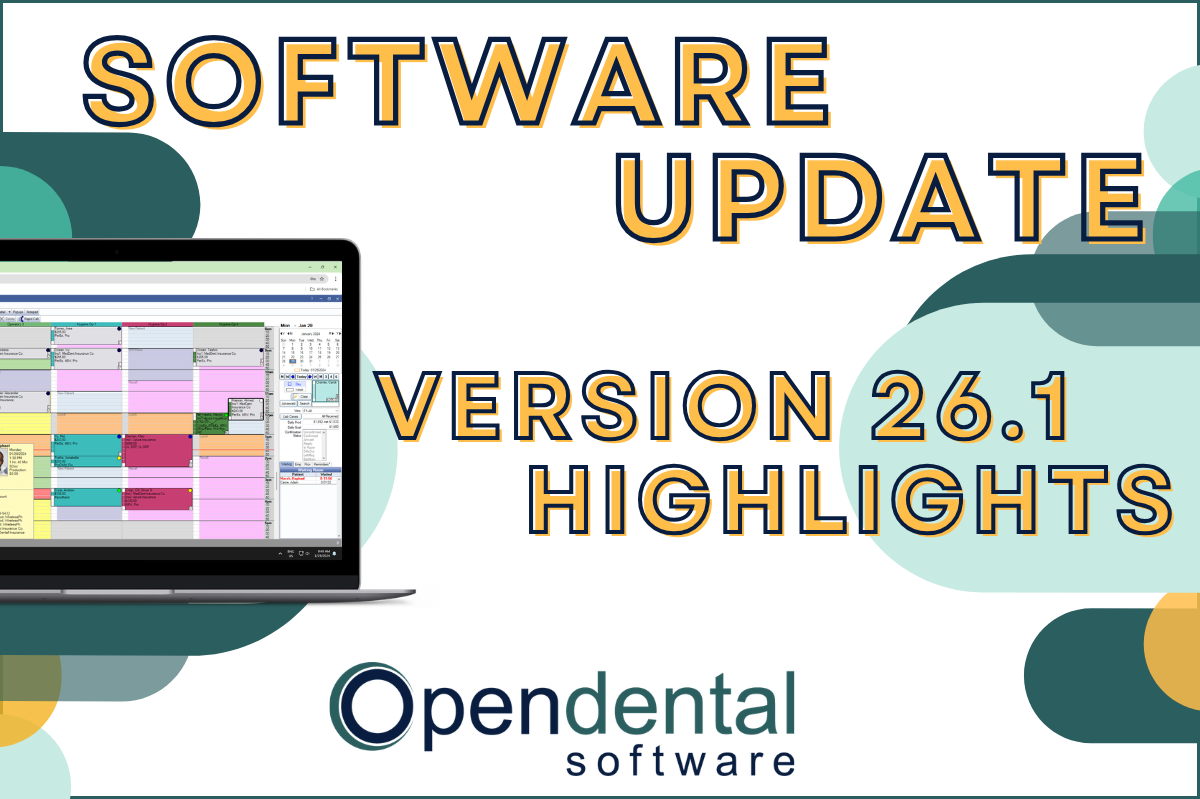 Read more: Software Update: Stable Version 26.1 Highlights
Software Update: Stable Version 26.1 Highlights
Open Dental 26.1 is now stable! New features include ODTouch 25, custom insurance history categories, HTML billing emails, and much more.
-

Preventing Dental Anxiety: How to Keep Your Dental Office From Becoming a Haunted House
Read more: Preventing Dental Anxiety: How to Keep Your Dental Office From Becoming a Haunted HouseOctober marks a season of spookiness, but dental visits shouldn’t induce fear. With 54% of adults experiencing dental anxiety, addressing patient concerns through transparency, comfort, and appreciation can significantly reduce anxiety and foster trust.
-

Feature Highlight: Patient Dashboard
Read more: Feature Highlight: Patient DashboardHave you ever wished you could see more information about the patient you have selected at a glance? Maybe you’re tired of jumping between different modules in Open Dental and just want one centralized location to see more about your patient. Look no further than the Patient Dashboard! This (customizable!) little tool is often overlooked, since it’s not enabled by…
-

Favorite Queries From Our Experts: Production and Income
Read more: Favorite Queries From Our Experts: Production and IncomeOpen Dental users can generate detailed production and income reports using custom User Queries, offering insights by procedure, provider, or insurance carrier. In this post, our query experts share their favorites.
-

Protecting Your Practice: How to Vet Integrations
Read more: Protecting Your Practice: How to Vet IntegrationsNot all Open Dental integrations are safe. Here’s how to tell the difference between secure integrations and ones that could put your patient data at risk.
Guest Posts
Read content written by featured third-party guest writers.
-
 Read more: How DentalXChange’s Eligibility AI Is Getting Smarter
How DentalXChange’s Eligibility AI Is Getting Smarter
Manual eligibility checks are slow and error-prone. DentalXChange’s Eligibility AI now writes verified benefit data directly into your system, no retyping required.
-
 Read more: Boost Efficiency with Integrated DentalXChange Services
Boost Efficiency with Integrated DentalXChange Services
Learn how tight integration of DentalXChange EDI solutions with Open Dental boosts efficiency and productivity, and poises your practice for growth.
-
 Read more: The Business Backup Battle Royale: Tape vs. Cloud vs. Disk
The Business Backup Battle Royale: Tape vs. Cloud vs. Disk
Reviewing the most popular business backup solutions: Tape (LTO), Disk (HDD/SSD), and the Cloud. Weighing factors such as: Initial Investment, Maintenance Cost, Expandability, Accessibility, Sensitivity, and Ideal Uses.
-
 Read more: Favorite PaySimple Features for Open Dental Customers
Favorite PaySimple Features for Open Dental Customers
Users of PaySimple through Open Dental have experienced many benefits. See which PaySimple features are user favorites, and why.
-
 Read more: Does Your Website Pass the 8-Second Test?
Does Your Website Pass the 8-Second Test?
Are you presenting the information visitors need to see when they reach your website? Read this post to find out if your website passes the eight second test.
-
 Read more: The Wild World of HIPAA
The Wild World of HIPAA
More often than not it’s a simple mistake, rather than malicious intent, that leaks electronic Protected Health Information (ePHI) and ends up costing your practice money, time, and loss of reputation. Read this post for ways leaks can happen, and the steps you can take to prevent them.