
-
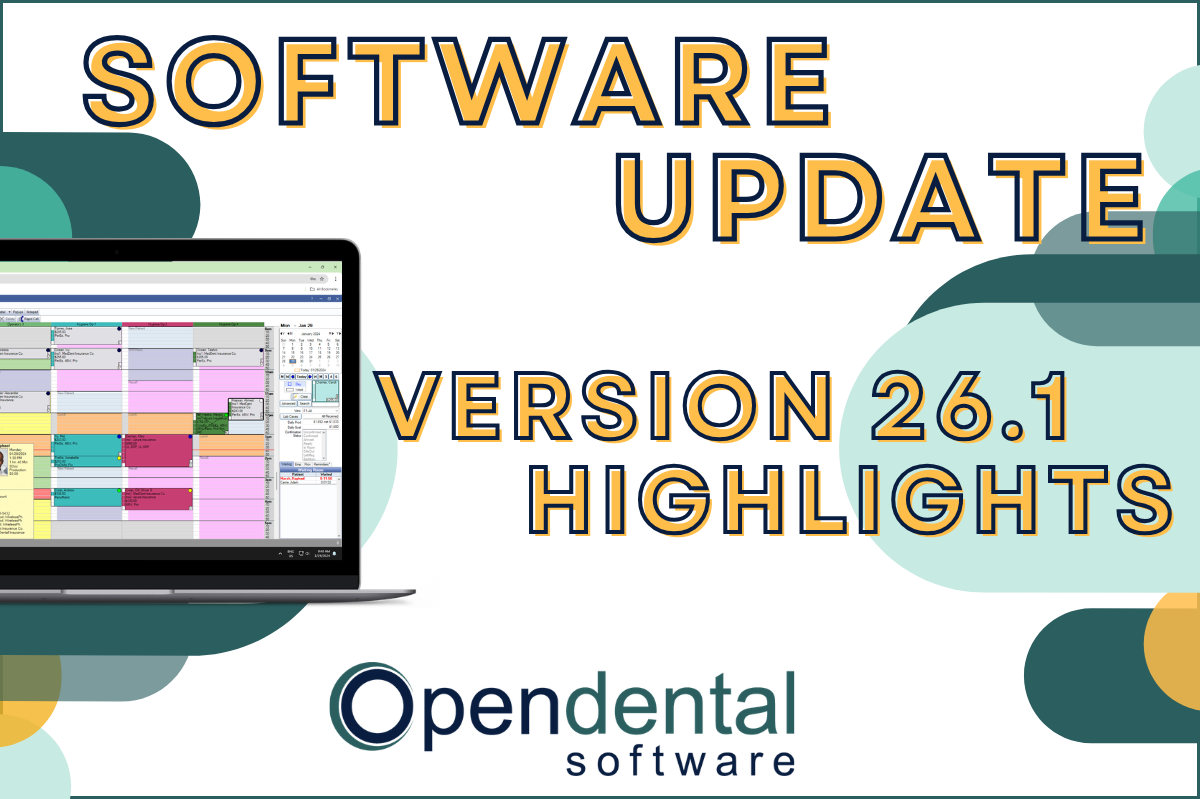 Read more: Software Update: Stable Version 26.1 Highlights
Software Update: Stable Version 26.1 Highlights
Open Dental 26.1 is now stable! New features include ODTouch 25, custom insurance history categories, HTML billing emails, and much more.
-

Software Update: Stable Version 20.2 Highlights
Read more: Software Update: Stable Version 20.2 HighlightsSoftware Update: Version 20.2 has been released as Stable, implementing some great features for practices to use as they reopen.
-

Ortho Features in Open Dental
Read more: Ortho Features in Open DentalIf your practice offers orthodontic services to your patients, this post is for you. We’ll be discussing essential setup steps, and give you some really smile-worthy tips for ongoing management of ortho activity in Open Dental.
-

Count On the Account Module
Read more: Count On the Account ModuleThe Account Module is where your patients’ financial information is stored. Learn how to manage what’s here, and get links to additional helpful resources.
-

Managing Recall For Better Patient and Practice Health
Read more: Managing Recall For Better Patient and Practice HealthThis post is all about Recall. Learn how to maximize the tools in Open Dental to manage the process efficiently and effectively, and even automate it completely.
Guest Posts
Read content written by featured third-party guest writers.
-
 Read more: How DentalXChange’s Eligibility AI Is Getting Smarter
How DentalXChange’s Eligibility AI Is Getting Smarter
Manual eligibility checks are slow and error-prone. DentalXChange’s Eligibility AI now writes verified benefit data directly into your system, no retyping required.
-
 Read more: Whose Data Is It Anyway? – The Best Ransomware Protection Guide
Whose Data Is It Anyway? – The Best Ransomware Protection Guide
As a business housing swaths of information, your greatest asset may also be a hacker’s biggest target. The best protection against the rising tide of ransomware begins here.
-
 Read more: What NOT To Do With a Server
What NOT To Do With a Server
The server is of the utmost importance to your Dental practice. Get best practices for your server-based network in this post.
-
 Read more: 6 Strategies for Building a Patient-Centric Payment Process
6 Strategies for Building a Patient-Centric Payment Process
Providing a patient-centric financial experience is crucial to the success of your practice. Here are a few areas to focus on whether you are just getting started or looking to fine-tune your processes.
-
 Read more: Dental Website Not Ranking Well? Here’s What You Should Know
Dental Website Not Ranking Well? Here’s What You Should Know
How can you ensure that your website doesn’t get lost in the crowd of online search results? Here are some things you can do to stand out.
-
 Read more: Dental billing training: Why is it necessary?
Dental billing training: Why is it necessary?
Dental billing training for your administrative team impacts cash flow and revenue. Learn what training your team needs, and how to tap into training resources.