
-
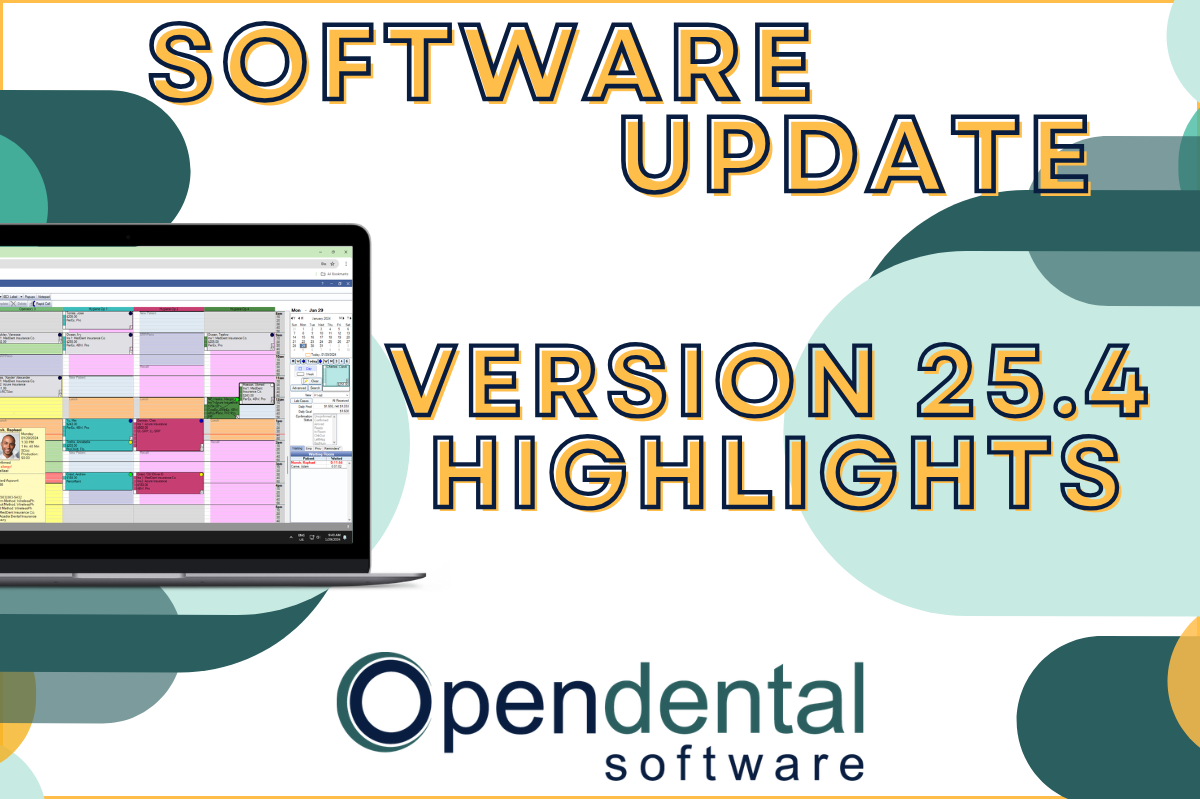 Read more: Software Update: Stable Version 25.4 Highlights
Software Update: Stable Version 25.4 Highlights
Open Dental 25.4 is live and packed with updates. From OCR on eClipboard that auto-fills patient insurance info, to a Clerri integration for in-house membership plans, there’s a lot to explore, including 11 features requested directly by users.
-

Questions & Answers with an Open Dental Expert: Conversions Supervisor
Read more: Questions & Answers with an Open Dental Expert: Conversions SupervisorOpen Dental is backed by a team of experts from all walks of life. In this post we interview Amber, who is a Conversions Supervisor.
-

Joining the Open Dental Community
Read more: Joining the Open Dental CommunityDid your office recently convert to Open Dental? Will you be switching to Open Dental soon? Maybe you’ve been a user for years but want to learn more. This post is for you! Learn all the benefits of being a part of the Open Dental Community.
-

Do’s and Don’ts for Setup and Cleanup
Read more: Do’s and Don’ts for Setup and CleanupTake a fresh look at things in your practice management software that may be outdated and need updating. Here are the do’s and don’ts of Open Dental setup and cleanup to prevent unintended consequences like changes to historical data.
-

Feature Highlight: Queries
Read more: Feature Highlight: QueriesWith Open Dental, you have complete control over your data, and User Queries provide powerful reporting capabilities. In this post, we’ll discuss how to find and run existing queries, how to save favorite queries, and how to submit a custom query request.
Guest Posts
Read content written by featured third-party guest writers.
-
 Read more: Why Your Open Dental Practice Deserves a Better Membership Experience
Why Your Open Dental Practice Deserves a Better Membership Experience
Managing membership plans across disconnected systems slows your team down. Here’s how Clerri, a native Open Dental integration, changes the experience for staff and patients.
-
 Read more: Open Dental integrates with CareCredit: Helpful information to get started
Open Dental integrates with CareCredit: Helpful information to get started
New, seamless integration makes it easier to offer patients financing options using CareCredit.
-
 Read more: Get insights into your average per patient charges, follow-up care with new ADA DERE reports
Get insights into your average per patient charges, follow-up care with new ADA DERE reports
Dentists connected to the ADA Dental Experience and Research Exchange™ (DERE) through Open Dental now have even more ways to gain insights into their practices. With the release of two new DERE reports, including its first financial report, participants can access more easy-to-understand data about their practices’ performance.
-
 Read more: Tips for successfully working with flexible staff
Tips for successfully working with flexible staff
COVID-19 has changed many aspects of our work, but the biggest change has been to workplace flexibility. See how this extends to staffing, and how you can capitalize on it.
-
 Read more: Intraoral Sensors Uncensored
Intraoral Sensors Uncensored
Intraoral sensors are some of the most widely used and vital pieces of dental technology is your practice. Learn which sensors are recommended (and which to avoid), and some great troubleshooting steps.
-
 Read more: General Dentists and Specialists: What to Include on Your Website
General Dentists and Specialists: What to Include on Your Website
Learn what essential information (and imagery) you should make sure to include in your general or specialty practice website.