
-
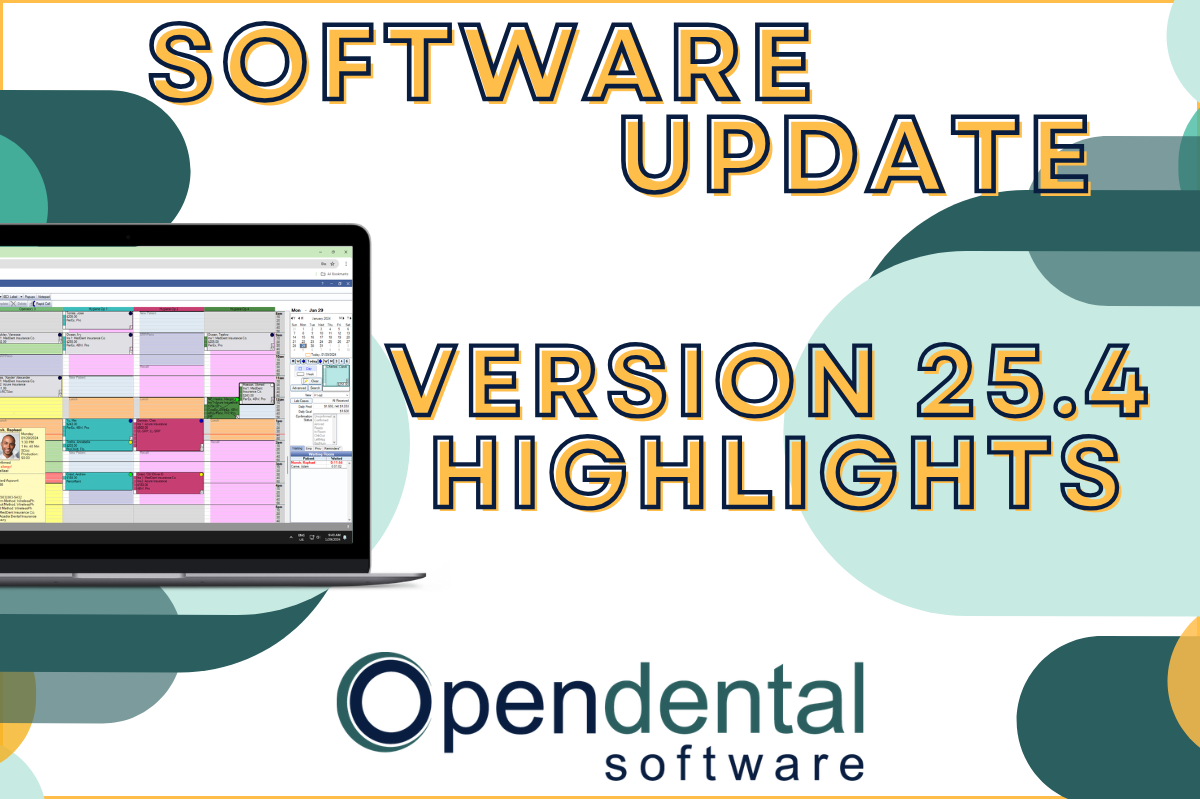 Read more: Software Update: Stable Version 25.4 Highlights
Software Update: Stable Version 25.4 Highlights
Open Dental 25.4 is live and packed with updates. From OCR on eClipboard that auto-fills patient insurance info, to a Clerri integration for in-house membership plans, there’s a lot to explore, including 11 features requested directly by users.
-

Software Update: Stable Version 18.3 Highlights
Read more: Software Update: Stable Version 18.3 HighlightsWe are excited to announce that Version 18.3 has been released as Stable. This version implemented 17 features and enhancements. Read the highlights in this post, then update to unlock all the software has to offer!
-

Top 10 Posts of 2018
Read more: Top 10 Posts of 2018It has been our privilege to help you become more proficient with the features and tools in Open Dental. Here are the top 10 posts of 2018.
-

Canada 101: Using Open Dental in Canada
Read more: Canada 101: Using Open Dental in CanadaOpen Dental is CDAnet certified and ready for use in all Canadian offices. Read this post to learn more about Canada-specific features in Open Dental, and setup steps to ensure your software will perform as expected.
-

Open Dental Marietta Street (Oregon) Campus Progress Update #2
Read more: Open Dental Marietta Street (Oregon) Campus Progress Update #2The Open Dental Campus, located on Marietta Street in Salem, Oregon is continuing to grow! Read about all that’s happened since our last update, and developments still to come.
Guest Posts
Read content written by featured third-party guest writers.
-
 Read more: Understanding EPCS Certification
Understanding EPCS Certification
EPCS certification isn’t just a regulatory checkbox. It’s what makes electronic prescribing of controlled substances actually safe, reducing fraud, cutting errors, and keeping providers on the right side of DEA requirements.
-
 Read more: Improve Patient Safety with Structured and Codified Sig
Improve Patient Safety with Structured and Codified Sig
Human error when eprescribing can leave patients at risk. Prevent errors with structured and codified sig, already in your NewCrop eprescribe tool.
-
 Read more: 3 Reasons Your Practice Needs Data Recovery
3 Reasons Your Practice Needs Data Recovery
Your practice has plans in place to respond to disasters and crisis situations. A data recovery plan is just as critical to minimize the impact of a data breach. Are you prepared?
-
 Read more: Identity Proofing (IDP): Why It’s Essential to Patients and Dentist’s Safety
Identity Proofing (IDP): Why It’s Essential to Patients and Dentist’s Safety
Learn more about Identity Proofing (IDP) and why it’s essential to keep patient and prescriber data safe.
-
 Read more: Building a Dental Team: Strategies for Long-Term Staff Retention
Building a Dental Team: Strategies for Long-Term Staff Retention
Attracting and retaining top-tier talent in a competitive field like dentistry is a challenge. It’s an ongoing process that demands more than just offering attractive compensation. Learn about retention strategies and online tools that can revolutionize staff retention, ensuring your practice’s success now and in the future.
-
 Read more: Fee-for-service vs insurance-based: dental practice business model showdown
Fee-for-service vs insurance-based: dental practice business model showdown
The two most common dental practice models are fee-for-service and insurance-based. Learn the pros and cons of each business model and which one aligns with your goals.