
-
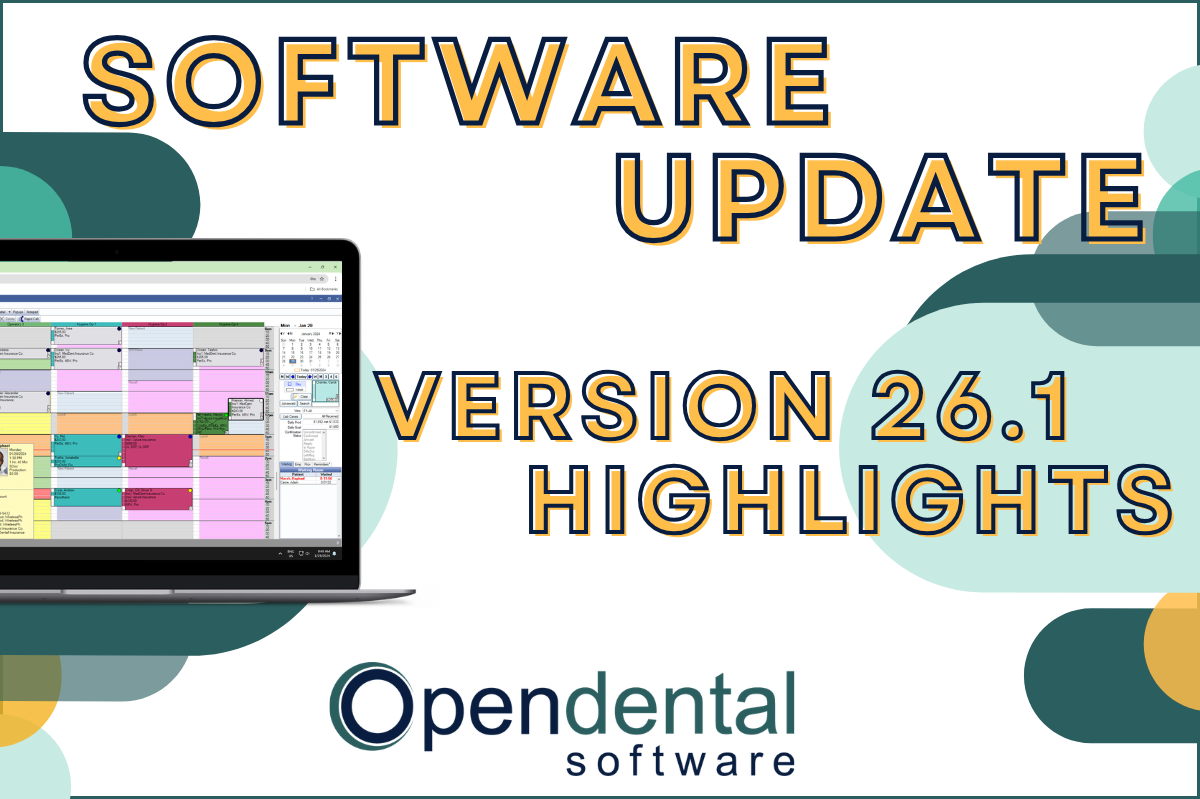 Read more: Software Update: Stable Version 26.1 Highlights
Software Update: Stable Version 26.1 Highlights
Open Dental 26.1 is now stable! New features include ODTouch 25, custom insurance history categories, HTML billing emails, and much more.
-

4 Key Ingredients in a Successful Treatment Plan
Read more: 4 Key Ingredients in a Successful Treatment PlanTreatment planning is an essential tool your practice can utilize to clearly communicate treatment needs the doctor has identified for your patients’ optimum dental health. This post looks at 4 key ingredients in a successful treatment plan: a plan presented by your practice, and accepted by your patient.
-

Software Update: Stable Version 18.3 Highlights
Read more: Software Update: Stable Version 18.3 HighlightsWe are excited to announce that Version 18.3 has been released as Stable. This version implemented 17 features and enhancements. Read the highlights in this post, then update to unlock all the software has to offer!
-

Top 10 Posts of 2018
Read more: Top 10 Posts of 2018It has been our privilege to help you become more proficient with the features and tools in Open Dental. Here are the top 10 posts of 2018.
-

Canada 101: Using Open Dental in Canada
Read more: Canada 101: Using Open Dental in CanadaOpen Dental is CDAnet certified and ready for use in all Canadian offices. Read this post to learn more about Canada-specific features in Open Dental, and setup steps to ensure your software will perform as expected.
Guest Posts
Read content written by featured third-party guest writers.
-
 Read more: How DentalXChange’s Eligibility AI Is Getting Smarter
How DentalXChange’s Eligibility AI Is Getting Smarter
Manual eligibility checks are slow and error-prone. DentalXChange’s Eligibility AI now writes verified benefit data directly into your system, no retyping required.
-
 Read more: 23 Jaw-Dropping Dental Branding & Logo Ideas
23 Jaw-Dropping Dental Branding & Logo Ideas
Patients tend to choose a brand they connect with over a generic alternative. Consider how you are portraying your practice vs. the competition, and see some great examples of dental branding.
-
 Read more: 9 Productivity Hacks for Busy Small Business Owners
9 Productivity Hacks for Busy Small Business Owners
Great small business owners are not only good at what they do, they excel at using their time in the best possible way. From being ruthless about distractions to eliminating busywork, here are our top productivity tips and life hacks for getting things done.
-
 Read more: Why Is HIPAA Important to Your Dental Practice?
Why Is HIPAA Important to Your Dental Practice?
Why is HIPAA important to patients and healthcare organizations and what does your dental practice need to do to remain HIPAA compliant at all times?
-
 Read more: A Guide to Contactless Payments
A Guide to Contactless Payments
“Contactless payment” has become the big buzzword across the payments landscape. But what does it actually mean, and how does it work? Learn the answers to these questions and more in our guide to contactless payments.
-
 Read more: “I’ll think about it.” – How to close the case when patients are shutting down
“I’ll think about it.” – How to close the case when patients are shutting down
You’ve probably had many treatment plan presentations that ended with the patient saying “I’ll think about.” Learn the questions to ask to turn your patients’ “I’ll think about it” into “Let’s get that treatment scheduled.”