-
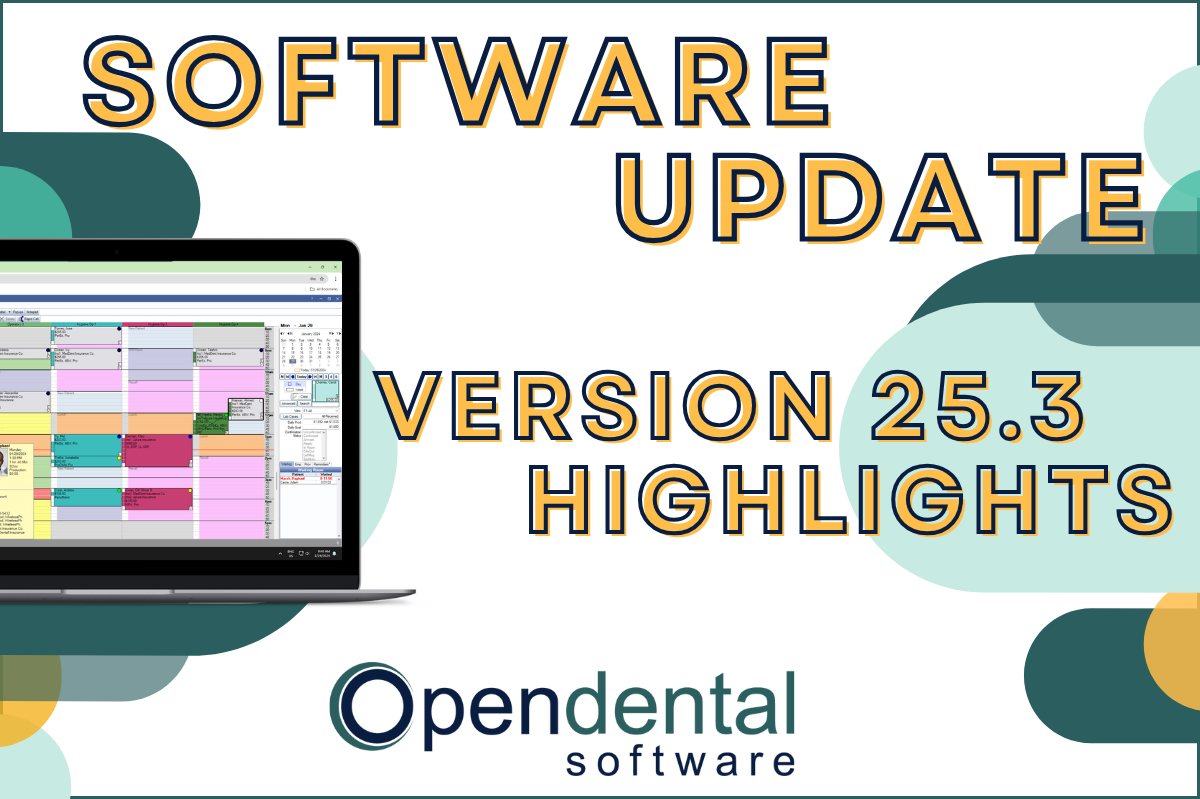 Read more: Software Update: Stable Version 25.3 Highlights
Software Update: Stable Version 25.3 Highlights
Open Dental Version 25.3 has been released as Stable! Our latest blog post goes into some of the highlights from this version, including a few user feature requests!
-

Software Update: Stable Version 17.2 Highlights
Read more: Software Update: Stable Version 17.2 HighlightsWe are excited to announce Version 17.2 has now been released as Stable. This versions implemented 29 features requested by our amazing users! Watch the video, or read all about our highlighted new features.
-

Does Your Backup Strategy Have the X-FACTOR?
Read more: Does Your Backup Strategy Have the X-FACTOR?Whether you host your Open Dental Software on a server in your practice or in the cloud, it is imperative that you have a comprehensive backup strategy. And don’t forget – this is also a requirement for HIPAA compliance. Does your backup strategy have the X-Factor? While there isn’t one specific element that makes or […]
-

Insurance Paid on a Different Code Than You Charted. Now What?
Read more: Insurance Paid on a Different Code Than You Charted. Now What?You’ve charted and completed bitewings (D0272 / D0273 / D0274) and a pano (D0330) for your patient, along with a few other procedure codes. You’ve submitted your claim, and you finally receive the insurance payment. But what’s this? The insurance paid based on a Full Mouth X-Ray (FMX) code D0210. Now what?
-

Plan Ahead: 6 Actions NOW to Fill Your Chairs in the Fall
Read more: Plan Ahead: 6 Actions NOW to Fill Your Chairs in the FallYour dental practice may experience seasonal slowness in the fall as kids head back to school. Here are some steps you can take now to keep your schedule full, and your staff working at full capacity.
Guest Posts
Read content written by featured third-party guest writers.
-
 Read more: AI Dental Software: What Actually Works in Modern Dental Practices
AI Dental Software: What Actually Works in Modern Dental Practices
Staff shortages, endless charting, patients who zone out mid-explanation. These are real problems. AI dental software is quietly solving them. Here’s what it does, what it doesn’t, and how to know if it’s right for your practice.
-
 Read more: Boost Efficiency with Integrated DentalXChange Services
Boost Efficiency with Integrated DentalXChange Services
Learn how tight integration of DentalXChange EDI solutions with Open Dental boosts efficiency and productivity, and poises your practice for growth.
-
 Read more: The Business Backup Battle Royale: Tape vs. Cloud vs. Disk
The Business Backup Battle Royale: Tape vs. Cloud vs. Disk
Reviewing the most popular business backup solutions: Tape (LTO), Disk (HDD/SSD), and the Cloud. Weighing factors such as: Initial Investment, Maintenance Cost, Expandability, Accessibility, Sensitivity, and Ideal Uses.
-
 Read more: Favorite PaySimple Features for Open Dental Customers
Favorite PaySimple Features for Open Dental Customers
Users of PaySimple through Open Dental have experienced many benefits. See which PaySimple features are user favorites, and why.
-
 Read more: Does Your Website Pass the 8-Second Test?
Does Your Website Pass the 8-Second Test?
Are you presenting the information visitors need to see when they reach your website? Read this post to find out if your website passes the eight second test.
-
 Read more: The Wild World of HIPAA
The Wild World of HIPAA
More often than not it’s a simple mistake, rather than malicious intent, that leaks electronic Protected Health Information (ePHI) and ends up costing your practice money, time, and loss of reputation. Read this post for ways leaks can happen, and the steps you can take to prevent them.