
-
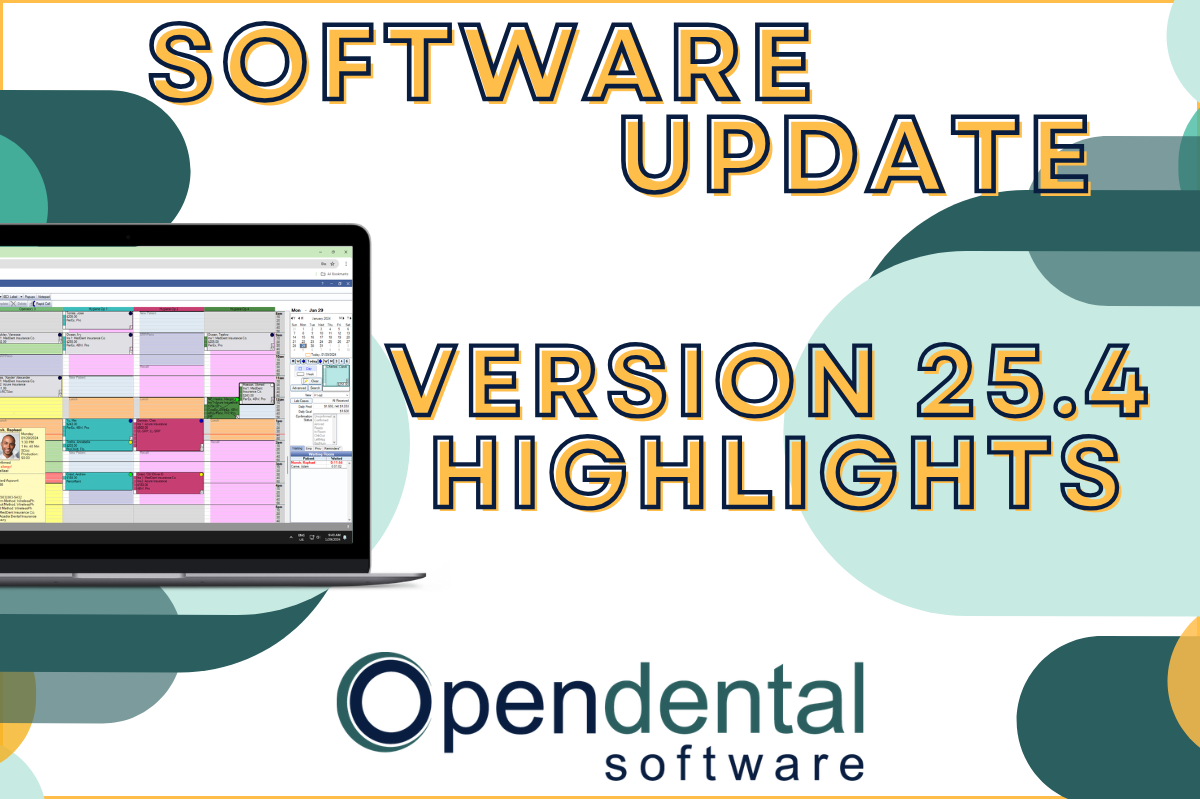 Read more: Software Update: Stable Version 25.4 Highlights
Software Update: Stable Version 25.4 Highlights
Open Dental 25.4 is live and packed with updates. From OCR on eClipboard that auto-fills patient insurance info, to a Clerri integration for in-house membership plans, there’s a lot to explore, including 11 features requested directly by users.
-

Finding Practice Management Software that Fits
Read more: Finding Practice Management Software that FitsYour Dental Practice Management Software decision will affect your practice and your patients in both the short- and long-term. Find the right fit with the tips in this post.
-

Feature Highlight: Blue Book
Read more: Feature Highlight: Blue BookThe Blue Book feature in Open Dental can help make treatment plan estimates more accurate for your patients on out-of-network plans. Learn how to enable and use this feature.
-

Tracking Actions with the Audit Trail
Read more: Tracking Actions with the Audit TrailLearn more about using the various Audit Trails available in Open Dental to see who took specific actions in the software, and when.
-

Open Dental Reports and Queries
Read more: Open Dental Reports and QueriesLearn about Open Dental’s standard reports and user queries that allow you to pull the data you need to manage your practice effectively.
Guest Posts
Read content written by featured third-party guest writers.
-
 Read more: Understanding EPCS Certification
Understanding EPCS Certification
EPCS certification isn’t just a regulatory checkbox. It’s what makes electronic prescribing of controlled substances actually safe, reducing fraud, cutting errors, and keeping providers on the right side of DEA requirements.
-
 Read more: Get insights into your average per patient charges, follow-up care with new ADA DERE reports
Get insights into your average per patient charges, follow-up care with new ADA DERE reports
Dentists connected to the ADA Dental Experience and Research Exchange™ (DERE) through Open Dental now have even more ways to gain insights into their practices. With the release of two new DERE reports, including its first financial report, participants can access more easy-to-understand data about their practices’ performance.
-
 Read more: Tips for successfully working with flexible staff
Tips for successfully working with flexible staff
COVID-19 has changed many aspects of our work, but the biggest change has been to workplace flexibility. See how this extends to staffing, and how you can capitalize on it.
-
 Read more: Intraoral Sensors Uncensored
Intraoral Sensors Uncensored
Intraoral sensors are some of the most widely used and vital pieces of dental technology is your practice. Learn which sensors are recommended (and which to avoid), and some great troubleshooting steps.
-
 Read more: General Dentists and Specialists: What to Include on Your Website
General Dentists and Specialists: What to Include on Your Website
Learn what essential information (and imagery) you should make sure to include in your general or specialty practice website.
-
 Read more: 3 times a dentist should file a medical claim versus a dental claim
3 times a dentist should file a medical claim versus a dental claim
Learn when you should file a medical insurance claim instead of a dental insurance claim, and when you would file the medical claim as primary and the dental claim as secondary.