-
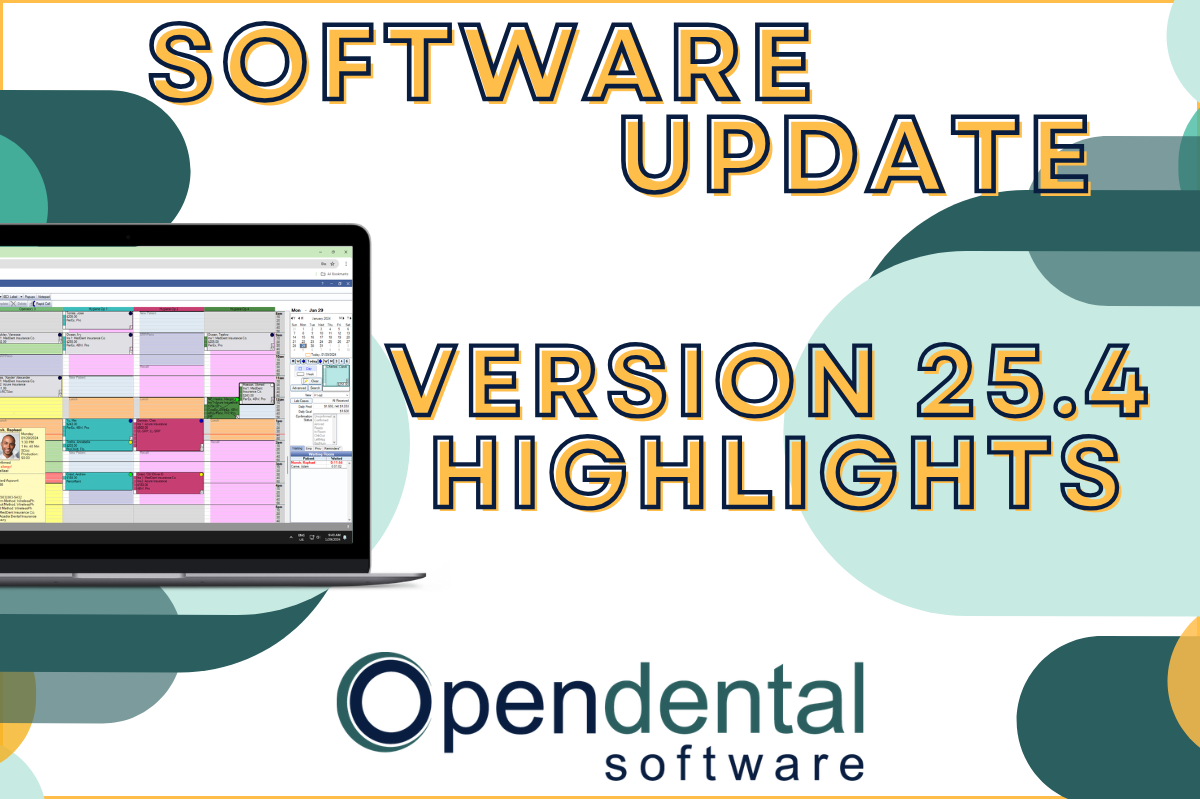 Read more: Software Update: Stable Version 25.4 Highlights
Software Update: Stable Version 25.4 Highlights
Open Dental 25.4 is live and packed with updates. From OCR on eClipboard that auto-fills patient insurance info, to a Clerri integration for in-house membership plans, there’s a lot to explore, including 11 features requested directly by users.
-

Taking on the Treatment Plan
Read more: Taking on the Treatment PlanThe Treatment Plan is vital for presenting your patients with recommended treatment, determining insurance estimates, and estimated patient responsibility. In this post, we’ll cover preauthorizations, saving and signing treatment plans, and more!
-

Channeling the Chart Module
Read more: Channeling the Chart ModuleThe Chart Module is at the heart of patient care. Learn about customizing the layout, charting treatment, storing medical info and more.
-

Patient Statements, Explained: Individual Statement Options
Read more: Patient Statements, Explained: Individual Statement OptionsPatient statements come in all different shapes and sizes. We’ll review the various options, and how to create them with just a few clicks.
-

Feature Highlight: Code Groups
Read more: Feature Highlight: Code GroupsOver the last few versions of Open Dental, we’ve implemented a new feature called Code Groups. These allow for more flexibility and customization of Frequency Limitations and Age Limits in insurance plans.
Guest Posts
Read content written by featured third-party guest writers.
-
 Read more: AI Dental Software: What Actually Works in Modern Dental Practices
AI Dental Software: What Actually Works in Modern Dental Practices
Staff shortages, endless charting, patients who zone out mid-explanation. These are real problems. AI dental software is quietly solving them. Here’s what it does, what it doesn’t, and how to know if it’s right for your practice.
-
 Read more: Protect Your Communications with a HIPAA Security Rule Checklist
Protect Your Communications with a HIPAA Security Rule Checklist
A HIPAA Security Rule checklist is an invaluable document you can refer to periodically to make sure you remain compliant with the HIPAA Security Rule.
-
 Read more: How To Prevent Data Breaches: 12 Best Practices
How To Prevent Data Breaches: 12 Best Practices
The best way to protect against the hassle and cost of data breaches is prevention, but the first step is understanding them. This guide outlines the types of data breaches your practice could encounter and the simple steps to prevent data breach incidents from occurring in the first place.
-
 Read more: Four Steps to IT Success for Dental Startup Practices
Four Steps to IT Success for Dental Startup Practices
Learn the critical IT setup components, their timeline, and what to look for in an IT partner for your start-up dental practice.
-
 Read more: Building a Team of Owners
Building a Team of Owners
Just as there are many causes of stress in the dental profession, there are also many solutions to coping with and overcoming it. In this article, we’ll explore how using actionable data can help you to build a team where everyone thinks like an owner.
-
 Read more: How to Update Your Disaster Recovery Plan and Checklists
How to Update Your Disaster Recovery Plan and Checklists
A disaster recovery plan is essential for all HIPAA compliant businesses. Moreover, it is crucial this plan is regularly updated to ensure PHI data is safe no matter what.