
-
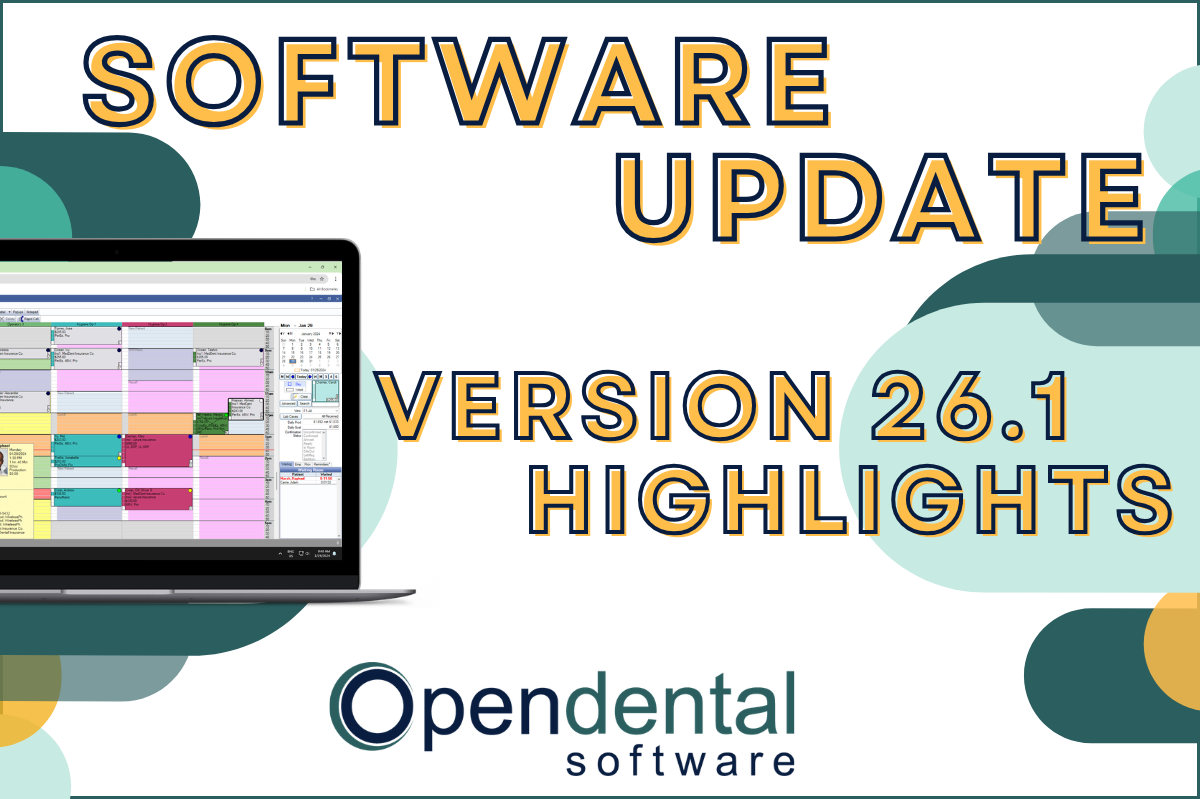 Read more: Software Update: Stable Version 26.1 Highlights
Software Update: Stable Version 26.1 Highlights
Open Dental 26.1 is now stable! New features include ODTouch 25, custom insurance history categories, HTML billing emails, and much more.
-

Benefits of Using Dynamic Payment Plans
Read more: Benefits of Using Dynamic Payment PlansDynamic Payment Plans can revolutionize the way your office accepts payments from patients. With the ability to set up both closed and open-ended repayment agreements, your office can offer patients the flexibility they want to get the treatment they need.
-

Insurance Plans Part 2: Complex Plan Types
Read more: Insurance Plans Part 2: Complex Plan TypesIn Part 2 of our insurance plan type series, we discuss the setup of more complex insurance plans including capitation and Medicaid/Flat Co-Pay plans.
-

Software Update: Stable Version 23.2 Highlights
Read more: Software Update: Stable Version 23.2 HighlightsOpen Dental Version 23.2 has been released as Stable, and includes 4 features requested by users. Join us as we highlight the new features.
-

Insurance Plans Part 1: Common Plan Types
Read more: Insurance Plans Part 1: Common Plan TypesSetting up the insurance plan correctly and using updated fee schedules is key to getting accurate estimates. This post examines four common plan types.
Guest Posts
Read content written by featured third-party guest writers.
-
 Read more: How DentalXChange’s Eligibility AI Is Getting Smarter
How DentalXChange’s Eligibility AI Is Getting Smarter
Manual eligibility checks are slow and error-prone. DentalXChange’s Eligibility AI now writes verified benefit data directly into your system, no retyping required.
-
 Read more: Manual vs Digital Dental Charting: Everything You Need to Know
Manual vs Digital Dental Charting: Everything You Need to Know
Manual charting is costing your practice more than you think, in time, accuracy, and staffing. Here’s how digital charting stacks up.
-
 Read more: Why Your Open Dental Practice Deserves a Better Membership Experience
Why Your Open Dental Practice Deserves a Better Membership Experience
Managing membership plans across disconnected systems slows your team down. Here’s how Clerri, a native Open Dental integration, changes the experience for staff and patients.
-
 Read more: Why Dental Payers Are Rethinking Network Connectivity
Why Dental Payers Are Rethinking Network Connectivity
Managing 50+ individual connections is costing dental payers more than they realize. Here’s how a single gateway changes the equation.
-
 Read more: Best Practices for Featuring Financing in Dental Treatment Plans
Best Practices for Featuring Financing in Dental Treatment Plans
Many patients skip recommended dental care because of cost, not because they don’t want it. Offering flexible financing and training your team to talk about it clearly can make a real difference in treatment acceptance and patient trust.
-
 Read more: How to Understand Dental Marketing ROI
How to Understand Dental Marketing ROI
Dental marketing ROI isn’t just about how much you spent vs. how much you made. Leads, scheduling rates, treatment acceptance, and lifetime patient value all play a role. Here’s how to connect the dots.