
-
 Read more: Software Update: Stable Version 25.4 Highlights
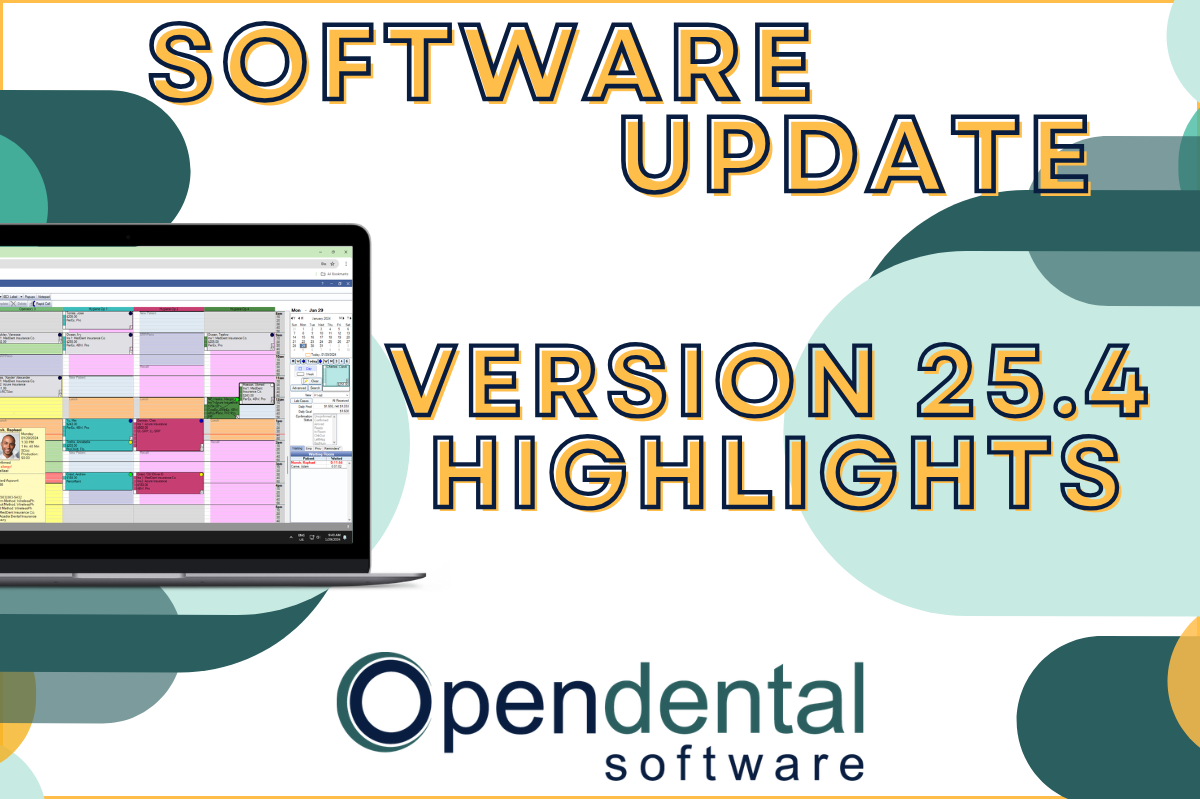
Software Update: Stable Version 25.4 Highlights
Open Dental 25.4 is live and packed with updates. From OCR on eClipboard that auto-fills patient insurance info, to a Clerri integration for in-house membership plans, there’s a lot to explore, including 11 features requested directly by users.
-

Employee Spotlight: Hannah
Read more: Employee Spotlight: HannahIn our continuing Employee Spotlight series, we introduce Hannah, whose hard work and dedication have truly made a difference in our organization.
-

PDMP and e-Prescribing in Open Dental
Read more: PDMP and e-Prescribing in Open DentalLearn about integrated tools in Open Dental that help you comply with state mandates for both PDMP and e-prescribing (EPCS).
-

Benefits of Using Dynamic Payment Plans
Read more: Benefits of Using Dynamic Payment PlansDynamic Payment Plans can revolutionize the way your office accepts payments from patients. With the ability to set up both closed and open-ended repayment agreements, your office can offer patients the flexibility they want to get the treatment they need.
-

Insurance Plans Part 2: Complex Plan Types
Read more: Insurance Plans Part 2: Complex Plan TypesIn Part 2 of our insurance plan type series, we discuss the setup of more complex insurance plans including capitation and Medicaid/Flat Co-Pay plans.
Guest Posts
Read content written by featured third-party guest writers.
-
 Read more: Why Dental Payers Are Rethinking Network Connectivity
Why Dental Payers Are Rethinking Network Connectivity
Managing 50+ individual connections is costing dental payers more than they realize. Here’s how a single gateway changes the equation.
-
 Read more: Get insights into your average per patient charges, follow-up care with new ADA DERE reports
Get insights into your average per patient charges, follow-up care with new ADA DERE reports
Dentists connected to the ADA Dental Experience and Research Exchange™ (DERE) through Open Dental now have even more ways to gain insights into their practices. With the release of two new DERE reports, including its first financial report, participants can access more easy-to-understand data about their practices’ performance.
-
 Read more: Tips for successfully working with flexible staff
Tips for successfully working with flexible staff
COVID-19 has changed many aspects of our work, but the biggest change has been to workplace flexibility. See how this extends to staffing, and how you can capitalize on it.
-
 Read more: Intraoral Sensors Uncensored
Intraoral Sensors Uncensored
Intraoral sensors are some of the most widely used and vital pieces of dental technology is your practice. Learn which sensors are recommended (and which to avoid), and some great troubleshooting steps.
-
 Read more: General Dentists and Specialists: What to Include on Your Website
General Dentists and Specialists: What to Include on Your Website
Learn what essential information (and imagery) you should make sure to include in your general or specialty practice website.
-
 Read more: 3 times a dentist should file a medical claim versus a dental claim
3 times a dentist should file a medical claim versus a dental claim
Learn when you should file a medical insurance claim instead of a dental insurance claim, and when you would file the medical claim as primary and the dental claim as secondary.