
-
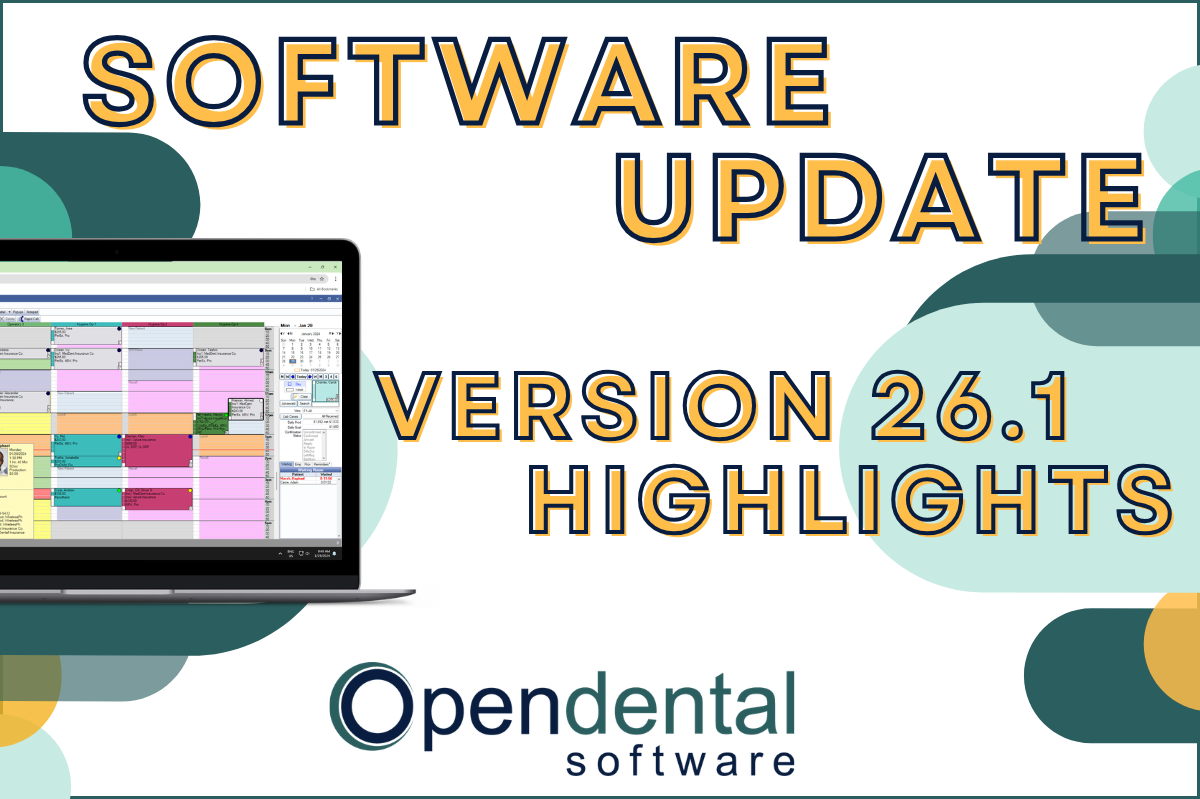 Read more: Software Update: Stable Version 26.1 Highlights
Software Update: Stable Version 26.1 Highlights
Open Dental 26.1 is now stable! New features include ODTouch 25, custom insurance history categories, HTML billing emails, and much more.
-

4 Key Ingredients in a Successful Treatment Plan
Read more: 4 Key Ingredients in a Successful Treatment PlanTreatment planning is an essential tool your practice can utilize to clearly communicate treatment needs the doctor has identified for your patients’ optimum dental health. This post looks at 4 key ingredients in a successful treatment plan: a plan presented by your practice, and accepted by your patient.
-

Software Update: Stable Version 18.3 Highlights
Read more: Software Update: Stable Version 18.3 HighlightsWe are excited to announce that Version 18.3 has been released as Stable. This version implemented 17 features and enhancements. Read the highlights in this post, then update to unlock all the software has to offer!
-

Top 10 Posts of 2018
Read more: Top 10 Posts of 2018It has been our privilege to help you become more proficient with the features and tools in Open Dental. Here are the top 10 posts of 2018.
-

Canada 101: Using Open Dental in Canada
Read more: Canada 101: Using Open Dental in CanadaOpen Dental is CDAnet certified and ready for use in all Canadian offices. Read this post to learn more about Canada-specific features in Open Dental, and setup steps to ensure your software will perform as expected.
Guest Posts
Read content written by featured third-party guest writers.
-
 Read more: How DentalXChange’s Eligibility AI Is Getting Smarter
How DentalXChange’s Eligibility AI Is Getting Smarter
Manual eligibility checks are slow and error-prone. DentalXChange’s Eligibility AI now writes verified benefit data directly into your system, no retyping required.
-
 Read more: The Hidden Work That Happens Between Patient Visits (And Why It Matters More Than You Think)
The Hidden Work That Happens Between Patient Visits (And Why It Matters More Than You Think)
Before and after every appointment, dental teams manage dozens of behind-the-scenes tasks. Here’s how reducing that friction improves both operations and patient care.
-
 Read more: Manual vs Digital Dental Charting: Everything You Need to Know
Manual vs Digital Dental Charting: Everything You Need to Know
Manual charting is costing your practice more than you think, in time, accuracy, and staffing. Here’s how digital charting stacks up.
-
 Read more: Why Your Open Dental Practice Deserves a Better Membership Experience
Why Your Open Dental Practice Deserves a Better Membership Experience
Managing membership plans across disconnected systems slows your team down. Here’s how Clerri, a native Open Dental integration, changes the experience for staff and patients.
-
 Read more: Why Dental Payers Are Rethinking Network Connectivity
Why Dental Payers Are Rethinking Network Connectivity
Managing 50+ individual connections is costing dental payers more than they realize. Here’s how a single gateway changes the equation.
-
 Read more: Best Practices for Featuring Financing in Dental Treatment Plans
Best Practices for Featuring Financing in Dental Treatment Plans
Many patients skip recommended dental care because of cost, not because they don’t want it. Offering flexible financing and training your team to talk about it clearly can make a real difference in treatment acceptance and patient trust.