
-
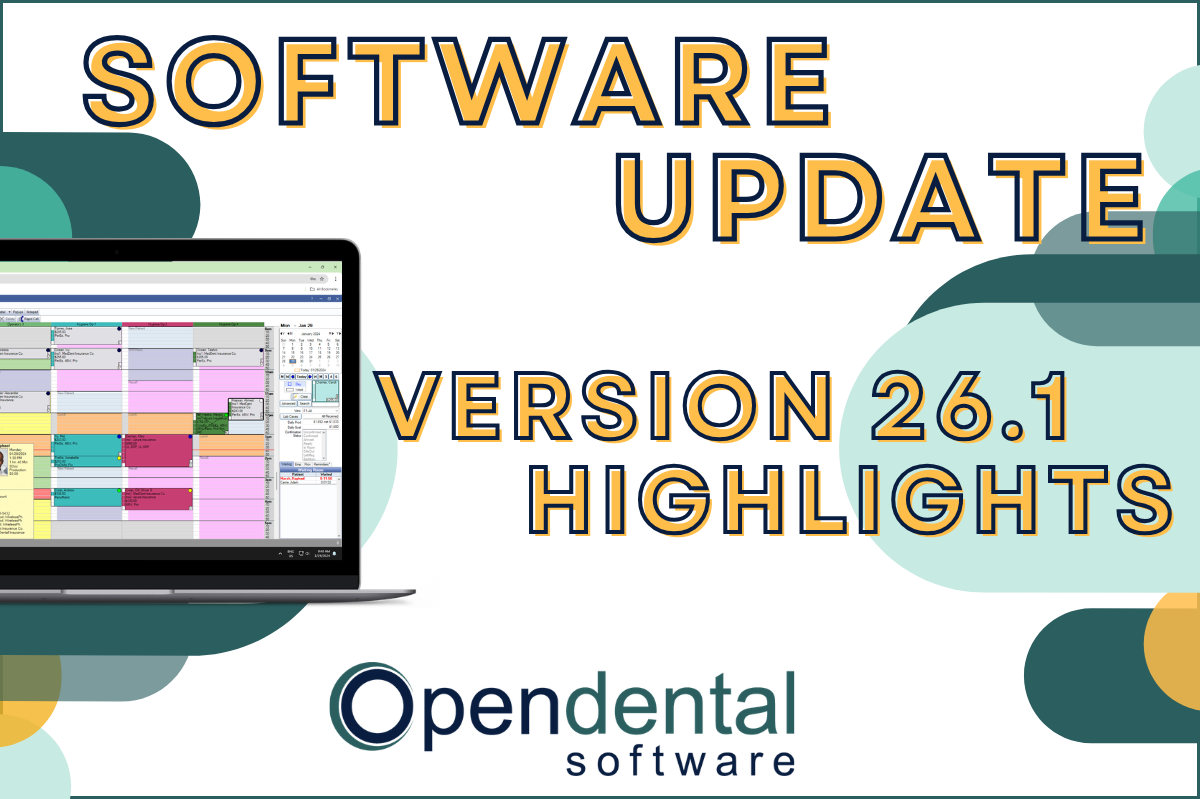 Read more: Software Update: Stable Version 26.1 Highlights
Software Update: Stable Version 26.1 Highlights
Open Dental 26.1 is now stable! New features include ODTouch 25, custom insurance history categories, HTML billing emails, and much more.
-

Our Most Popular Videos and Playlists
Read more: Our Most Popular Videos and PlaylistsOne way we help you maximize the tools in Open Dental is by keeping our webinars and videos up-to-date and relevant to life in your practice. In this post, we’ll share the most popular videos and playlists.
-

Tips & Tricks #31
Read more: Tips & Tricks #31In this Tips & Tricks post we’re focusing on reports already built into Open Dental. You know what you want – we’ll help you find it!
-

Tax Refund Season: Helping Patients Get the Care They Need
Read more: Tax Refund Season: Helping Patients Get the Care They NeedDental care is often postponed for financial reasons. Tax (and refund) season is here – learn the tools in Open Dental to help you quickly reach out to patients and get them scheduled for the care they need.
-

Questions & Answers with an Open Dental Expert: Conversions Supervisor
Read more: Questions & Answers with an Open Dental Expert: Conversions SupervisorOpen Dental is backed by a team of experts from all walks of life. In this post we interview Amber, who is a Conversions Supervisor.
Guest Posts
Read content written by featured third-party guest writers.
-
 Read more: How DentalXChange’s Eligibility AI Is Getting Smarter
How DentalXChange’s Eligibility AI Is Getting Smarter
Manual eligibility checks are slow and error-prone. DentalXChange’s Eligibility AI now writes verified benefit data directly into your system, no retyping required.
-
 Read more: Why Your Multi-Location Practice’s Missed Call Rate Is the Wrong Number to Track
Why Your Multi-Location Practice’s Missed Call Rate Is the Wrong Number to Track
What 8,887 patient calls revealed about front desk measurement, and why the group average hides it. Most dental practices track missed calls. It’s the number every phone system reports; it’s easy to explain, and it feels like it measures something important. For a multi-location group, it’s usually the first metric rolled up to the top.…
-
 Read more: Where Dental Practices Lose Revenue Without Realizing It
Where Dental Practices Lose Revenue Without Realizing It
Incomplete verifications, ignored denials, and aging patient balances add up to significant lost revenue. Here’s where the leaks happen and how to fix them.
-
 Read more: The Hidden Work That Happens Between Patient Visits (And Why It Matters More Than You Think)
The Hidden Work That Happens Between Patient Visits (And Why It Matters More Than You Think)
Before and after every appointment, dental teams manage dozens of behind-the-scenes tasks. Here’s how reducing that friction improves both operations and patient care.
-
 Read more: Manual vs Digital Dental Charting: Everything You Need to Know
Manual vs Digital Dental Charting: Everything You Need to Know
Manual charting is costing your practice more than you think, in time, accuracy, and staffing. Here’s how digital charting stacks up.
-
 Read more: Why Your Open Dental Practice Deserves a Better Membership Experience
Why Your Open Dental Practice Deserves a Better Membership Experience
Managing membership plans across disconnected systems slows your team down. Here’s how Clerri, a native Open Dental integration, changes the experience for staff and patients.