
-
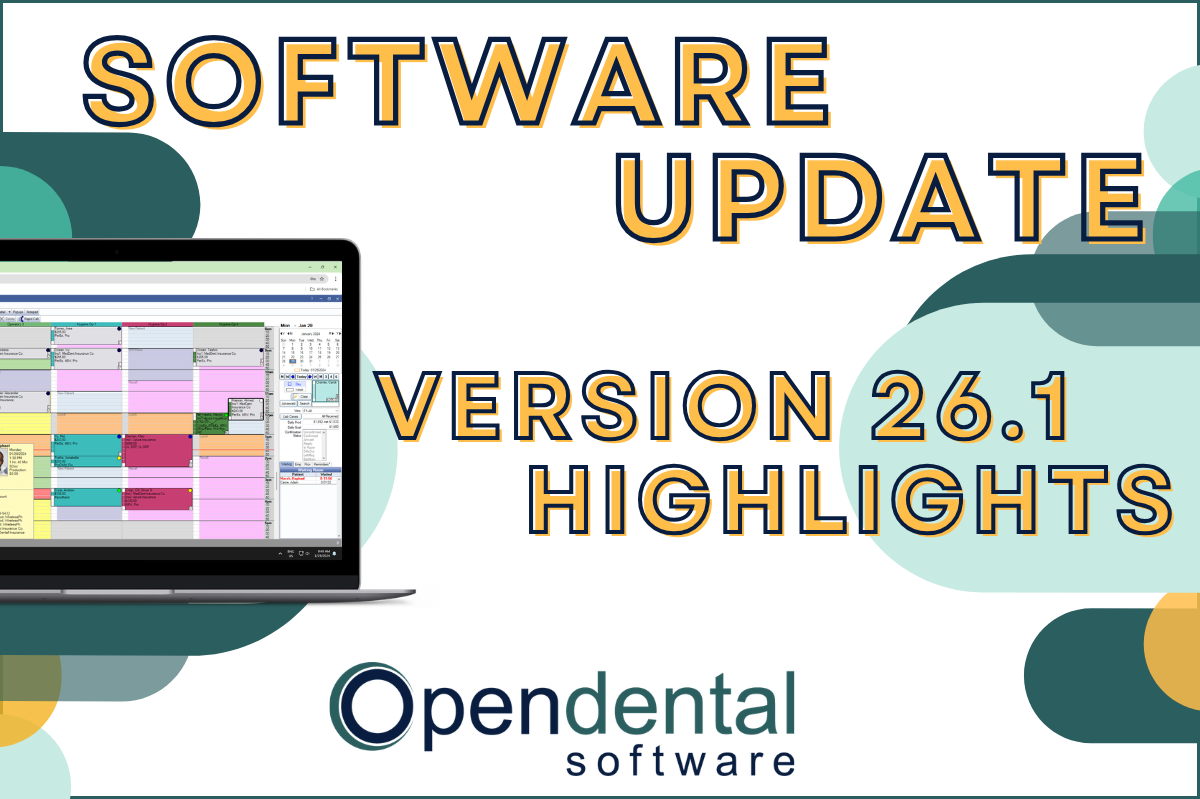 Read more: Software Update: Stable Version 26.1 Highlights
Software Update: Stable Version 26.1 Highlights
Open Dental 26.1 is now stable! New features include ODTouch 25, custom insurance history categories, HTML billing emails, and much more.
-

Software Update: Stable Version 25.2 Highlights
Read more: Software Update: Stable Version 25.2 HighlightsOpen Dental Version 25.2 has been released as Stable! Our latest blog post goes into some of the highlights from this version, including a few user feature requests!
-

Ending the Year With a Bang: Tips to Finish Out 2025 and Prepare for a Successful New Year
Read more: Ending the Year With a Bang: Tips to Finish Out 2025 and Prepare for a Successful New YearNow is the time to start on your year-end tasks and make sure there’s not a mad dash to get things done during the holidays. In our latest blog post, we explore some of the important tasks that your practice can do to set yourself up for a successful new year.
-

Feature Highlight: BetterDiagnostics
Read more: Feature Highlight: BetterDiagnosticsBetterDiagnostics is now integrated into the Open Dental Imaging Module! Read this post to learn more how this AI image analysis tool can benefit your practice.
-

Protecting Your Practice: How to Vet Integrations
Read more: Protecting Your Practice: How to Vet IntegrationsIt can be exciting to see a new software that claims to integrate with your existing practice management software and has claims of improving your workflow, but it’s important to ensure that any integration you’re using interacts with your data safely and securely. Read this post to learn more about integrations types so you can make informed decisions.
Guest Posts
Read content written by featured third-party guest writers.
-
 Read more: How DentalXChange’s Eligibility AI Is Getting Smarter
How DentalXChange’s Eligibility AI Is Getting Smarter
Manual eligibility checks are slow and error-prone. DentalXChange’s Eligibility AI now writes verified benefit data directly into your system, no retyping required.
-
 Read more: Manual vs Digital Dental Charting: Everything You Need to Know
Manual vs Digital Dental Charting: Everything You Need to Know
Manual charting is costing your practice more than you think, in time, accuracy, and staffing. Here’s how digital charting stacks up.
-
 Read more: Why Your Open Dental Practice Deserves a Better Membership Experience
Why Your Open Dental Practice Deserves a Better Membership Experience
Managing membership plans across disconnected systems slows your team down. Here’s how Clerri, a native Open Dental integration, changes the experience for staff and patients.
-
 Read more: Why Dental Payers Are Rethinking Network Connectivity
Why Dental Payers Are Rethinking Network Connectivity
Managing 50+ individual connections is costing dental payers more than they realize. Here’s how a single gateway changes the equation.
-
 Read more: Best Practices for Featuring Financing in Dental Treatment Plans
Best Practices for Featuring Financing in Dental Treatment Plans
Many patients skip recommended dental care because of cost, not because they don’t want it. Offering flexible financing and training your team to talk about it clearly can make a real difference in treatment acceptance and patient trust.
-
 Read more: How to Understand Dental Marketing ROI
How to Understand Dental Marketing ROI
Dental marketing ROI isn’t just about how much you spent vs. how much you made. Leads, scheduling rates, treatment acceptance, and lifetime patient value all play a role. Here’s how to connect the dots.